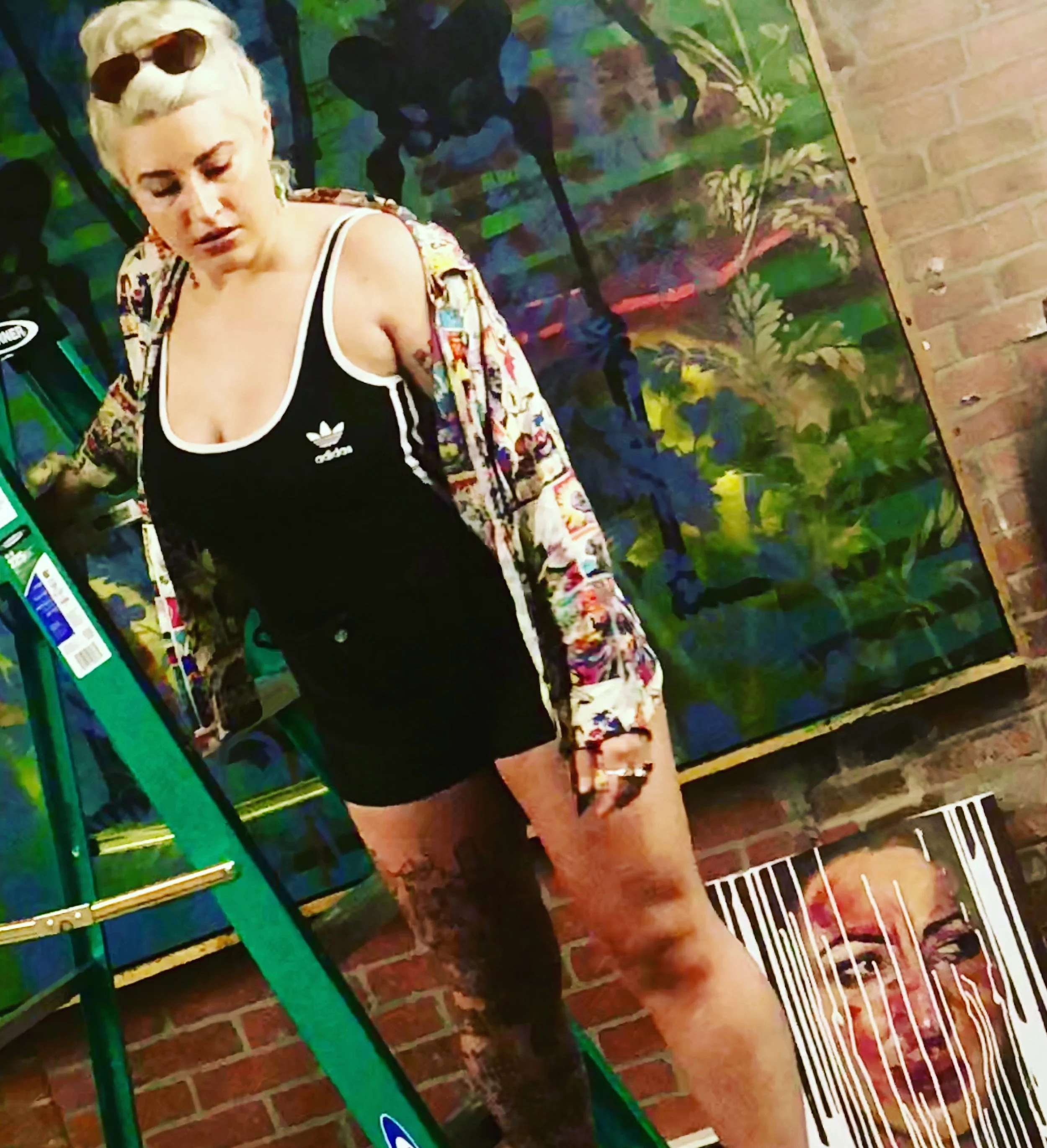
Audrey King is a painter based in Providence, Rhode Island. Of Argentinian and American descent, she was raised in a family of working artists and grew up surrounded by creative practice. She received a BFA from the Rhode Island School of Design and currently maintains a studio practice alongside her work in Providence's music and arts organizations. She has exhibited in Providence and New York.
King's paintings draw from Catholic devotional imagery, social media culture, and personal trauma. Combining the visual language of religious iconography with imagery borrowed from cosmetic surgery recovery, her current work depicts figures suspended between sainthood and self-invention.
Working through layers of drips and luminous color, King constructs contemporary icons that reflect on transformation and the enduring desire to remake the self. Her current body of work examines cosmetic surgery as a modern ritual of becoming, merging the aesthetics of cosmetic surgery and martyrdom into a personal mythology shaped by both cultural inheritance and contemporary image culture.
These are portraits of contemporary saints. Derived from social media feeds of “before and afters” and healing processes from cosmetic improvements. Complete with wounds and ecstasy, demonstrating the promise that suffering could transform the body into something closer to perfection. There is a certain moral superiority in constructing the perfect body. When halos are surgical dressings, martyrdom becomes elective.
At the center is a fascination with the contradictions of contemporary beauty culture. Effortless perfection is often anything but effortless. We are encouraged to celebrate individuality while relentlessly reshaping ourselves to fit increasingly narrow ideals.
These paintings are a cynical celebration of self inflicted violence in the pursuit of conformity. The incisions and bruises become evidence of a collective act of faith. The belief that transformation and perfection are worth the cost.
They are populated by figures caught between devotion and vanity, self-creation and self-destruction. They inhabit the uneasy space where aspiration becomes ritual and where the desire to belong can turn the body into both shrine and sacrifice.